Skip to content
ΤΡΥΦΗ
ENTR

ΤΡΥΦΗ

A Roman mosaic in Zile.

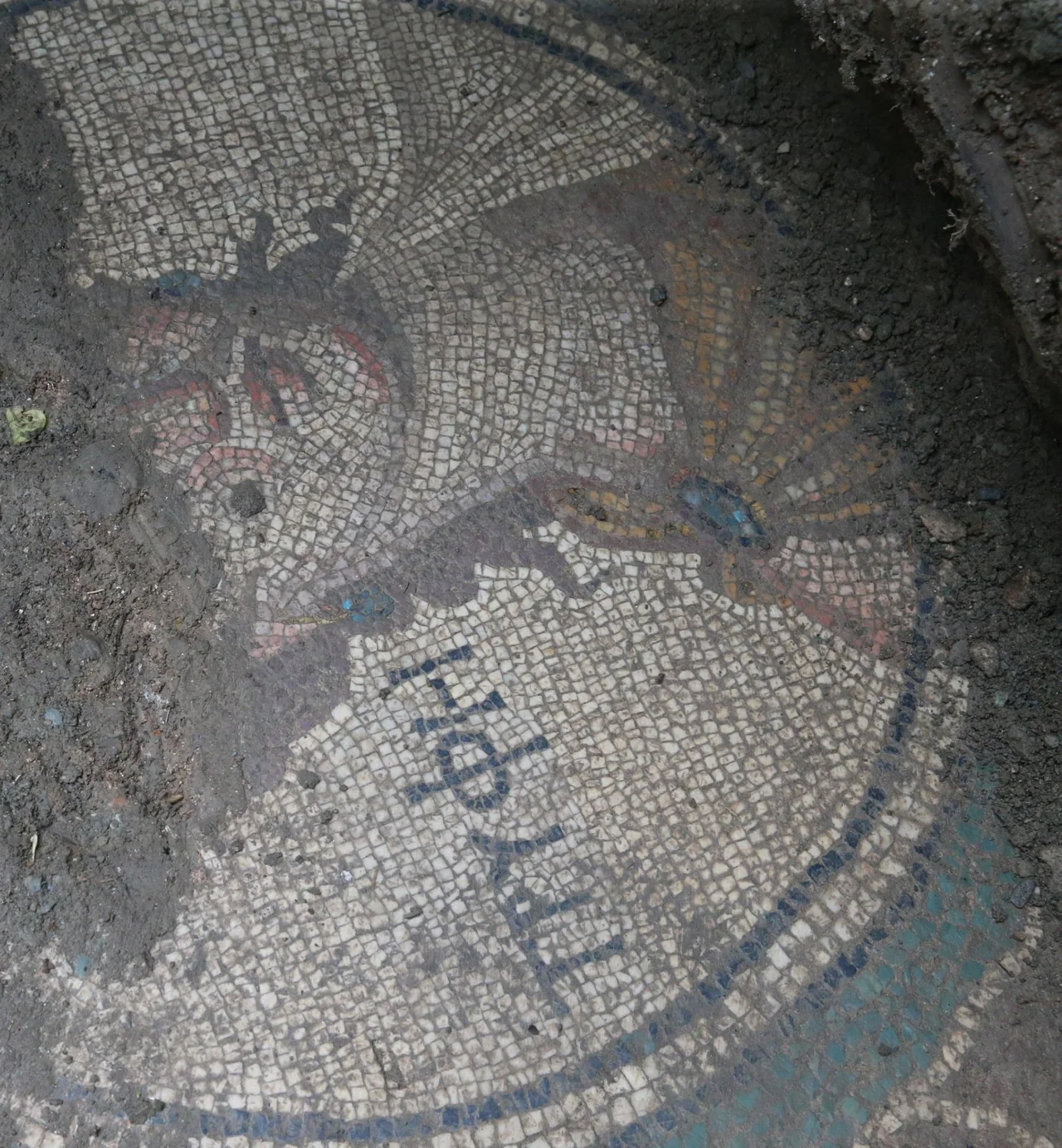
A pavement discovered in 2025 bears five Greek letters: ΤΡΥΦΗ. The word, associated with ease and luxury, names an image preserved from the ancient past of this town in Türkiye.

Dark Greek letters on a pale ground, coloured figure fragments and the curved edge of the panel.
Detail of the Zile mosaic inscribed ΤΡΥΦΗ, May 2025

Photo: Anadolu Agency (AA), 7 May 2025 · via Daily Sabah · source page

A word set in stone

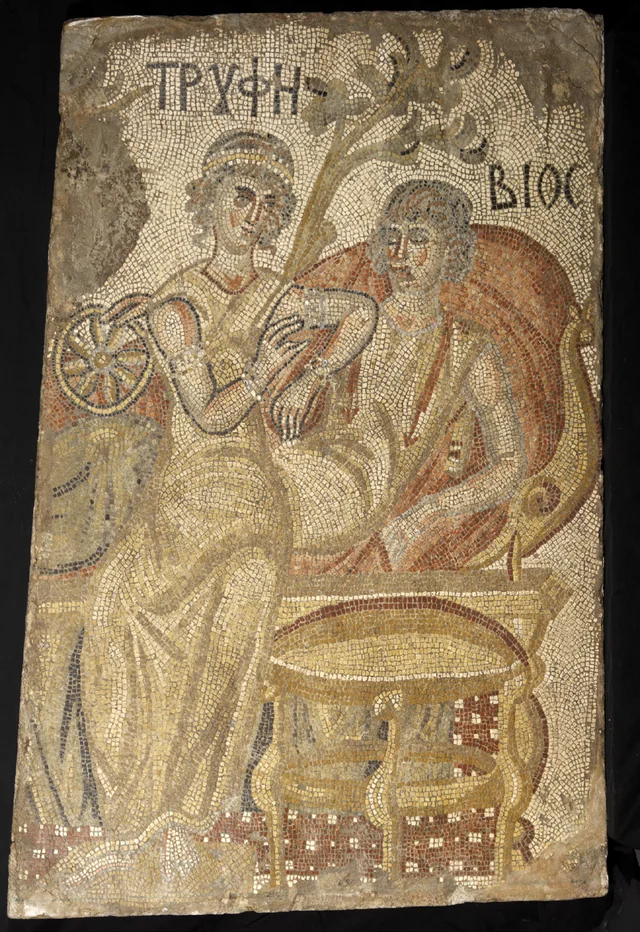
How did ancient artists picture the good life? Tryphe was one answer. At Olba she appears beside Life and the First Bath; on a panel said to come from Emesa, she shares a couch with Life. The Zile find adds another example to this artistic tradition of giving comfort, pleasure and prosperity a human form.

The Tryphe mosaic in Zile became public in May 2025 after an illegal excavation in the garden of a country house. The first report described a pavement with Greek lettering and a female figure in an exposed area of about 3 × 3 metres. Rescue work around that initial opening subsequently revealed further mosaic scenes. Read the excavation story
Art, space and conservation

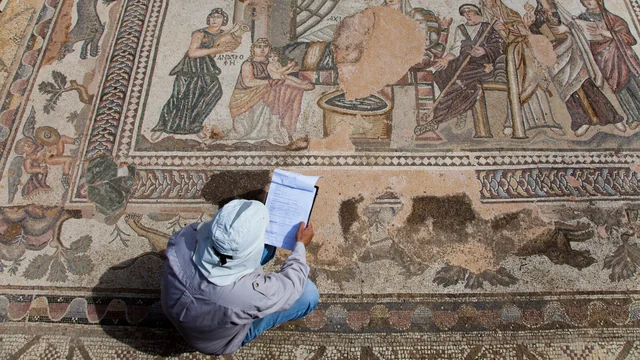
  1. Mosaic of Tryphe and Bios reclining on the same couch, identified by Greek names.01 · Tryphe in the history of artThe many faces of TrypheThe busts at Olba, a couch scene attributed to Emesa and the changing appearance of a personification.3 min read
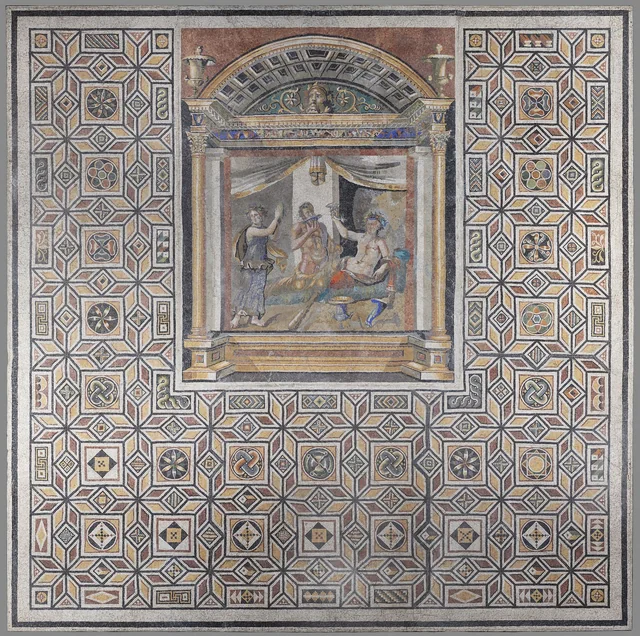
  2. The complete pavement, with broad geometric fields surrounding a figured scene.02 · Space and workmanship in Roman artMosaics in the Roman house: a picture within a roomHow do thresholds and furniture help explain a mosaic? The relationship between pictures and life in Roman rooms.3 min read
  3. A conservation trainee kneeling beside a mosaic and completing a condition form.03 · Mosaic conservationThe second life of a mosaic: conservation and careBeneath the image lie mortar, moisture and maintenance. What does the long-term care of a pavement involve?3 min read

The town behind the mosaic

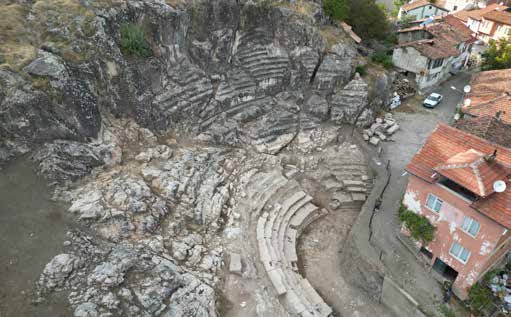
Rock-cut seating on the slope, lower masonry rows and the adjacent road and houses.

From Zela to Zile: sanctuary, theatre and town

From the sanctuary of Anaitis to a Roman theatre: written accounts and excavated buildings of ancient Zela.

Zile appears in ancient sources as Zela. Its history includes a sanctuary, Roman regional reorganisation and the battle fought between Caesar and Pharnakes II in 47 BC. Excavation of the theatre on the castle hill adds evidence from stone, terrain and construction to that written history. The Tryphe mosaic has brought an interior from this town into public view.

From the excavation chronology

New assessment of two room traces and a possible courtyard

In an interview published by İHA, archaeologist Semih Yaşar Çizikci described traces of two rooms at Zile. He also proposed a columned courtyard and a larger villa.

Read the full chronology